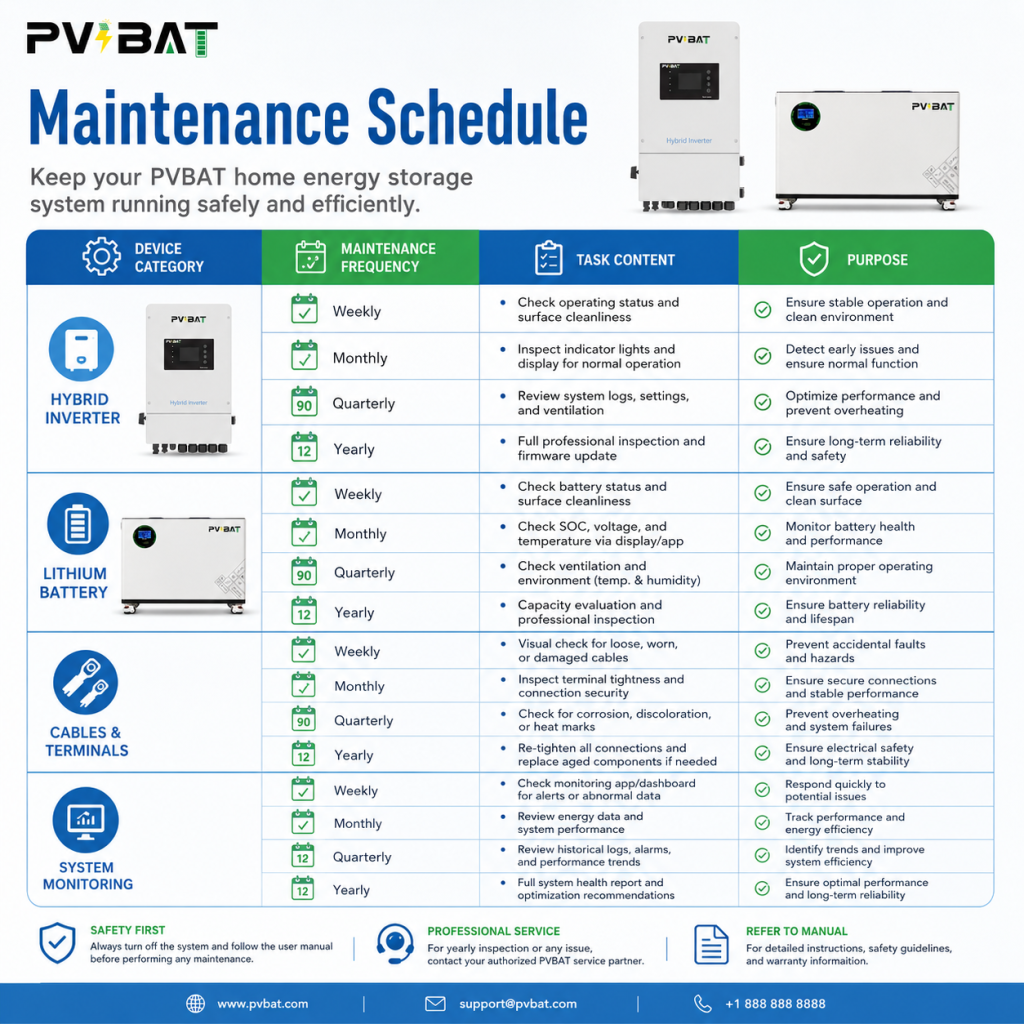

The service life of a home energy storage system (inverter + battery + solar panels) depends not only on the quality of the products themselves but is also closely related to daily maintenance. Many users neglect routine maintenance after installing their systems, leading to equipment failures, reduced efficiency, and a shorter lifespan, which in turn increases operating costs. Based on the characteristics of its products, PVBAT has compiled a practical maintenance guide for home energy storage systems to help users properly maintain their equipment, extend its service life, ensure long-term stable operation, and assist users in performing routine maintenance on their PV storage systems.
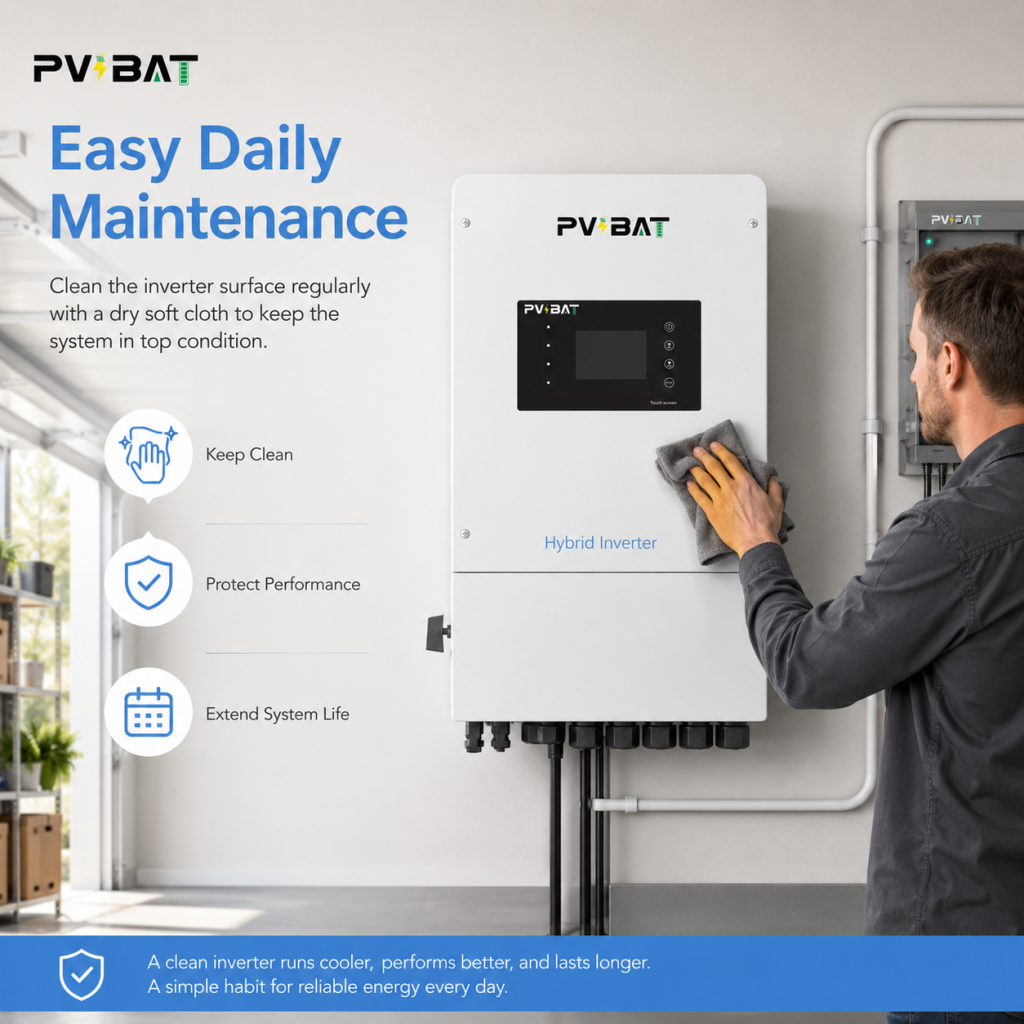
First, daily maintenance of the inverter. Regularly inspect the inverter’s installation environment to ensure adequate ventilation and that no debris is obstructing airflow, thereby preventing the equipment from overheating; Regularly clean dust and debris from the inverter’s surface using a dry, soft cloth; never rinse with water to prevent short circuits; regularly inspect the terminal blocks to ensure connections are secure, with no loosening or oxidation; monitor the inverter’s operating status; if a fault alarm occurs (such as error codes F01–F64), contact an after-sales engineer immediately for resolution—never disassemble the unit yourself to avoid causing further damage—and perform routine inverter maintenance.
Second, daily maintenance of lithium-ion batteries. Lithium-ion batteries should be stored in a dry, well-ventilated, and cool environment, away from direct sunlight and rain. Maintain a storage temperature between 10°C and 35°C to prevent extreme temperatures from affecting battery performance. If the battery will not be used for an extended period, charge it to 60% SOC (State of Charge). Every three months, discharge it to 30% and then recharge it to 60% to prevent irreversible damage caused by deep discharge; Regularly inspect battery wiring and connectors to ensure secure connections with no looseness or damage. If the battery exhibits abnormalities such as swelling, leakage, or unusual odors, stop using it immediately, contact after-sales service for resolution, and ensure proper maintenance of the energy storage lithium-ion batteries.
Finally, maintenance of the solar panels and the entire system. Regularly clean dust and stains from the surface of the solar panels to prevent shading and ensure optimal power generation efficiency; Inspect the solar panel mounts to ensure they are secure, with no loosening or deformation; regularly inspect the system’s cabling to ensure there is no damage or aging, preventing short circuits; conduct a comprehensive system commissioning once a year to check the coordinated operation of the inverter, battery, and solar panels, promptly identifying and resolving potential issues to prevent problems before they arise, and ensuring proper daily maintenance of the solar panels and comprehensive maintenance of the energy storage system.
PVBAT recommends that users perform regular maintenance on their energy storage systems in accordance with the maintenance guidelines. Users may also contact PVBAT’s professional after-sales team to arrange periodic inspection services, ensuring long-term stable operation of the system, maximizing equipment lifespan, reducing operating costs, and receiving professional support for energy storage system maintenance.