

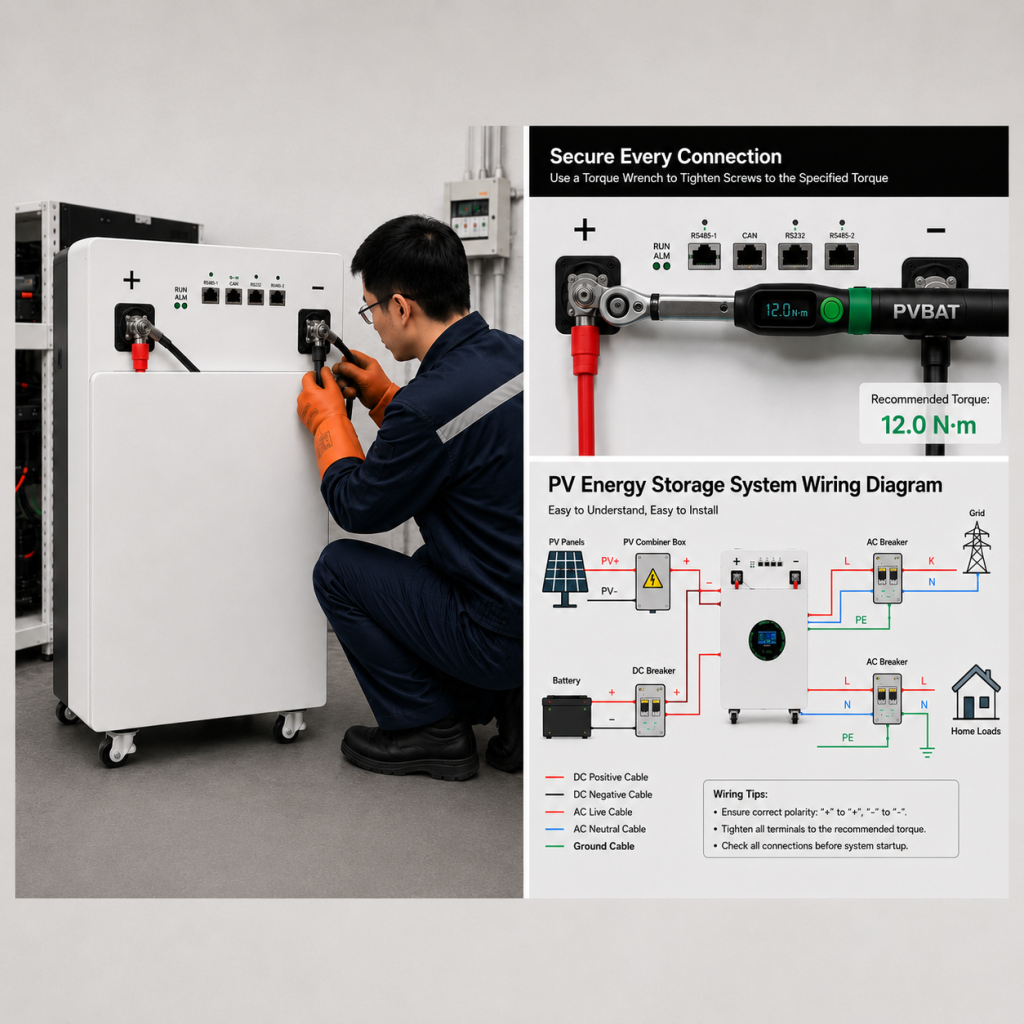
The quality of a photovoltaic energy storage system’s installation directly determines the equipment’s operational efficiency, safety, and service life. Many users experience equipment malfunctions, low power generation efficiency, and even safety hazards during installation due to non-standard procedures and neglect of details. As a professional brand with deep expertise in the energy storage sector, PVBAT has drawn upon years of experience in installing photovoltaic energy storage systems to compile a practical guide to avoid common pitfalls. Our professional engineers will walk you through the correct procedures step-by-step, helping you steer clear of industry-wide mistakes to ensure your home photovoltaic energy storage system is installed properly, guaranteeing stable operation and helping you avoid common installation pitfalls.
First, pre-installation preparations must not be overlooked. Verify that the installation environment meets requirements: keep the system away from flammable, explosive, or corrosive materials; avoid direct sunlight and exposure to rain; ensure the installation surface is level and secure; and allow sufficient space for heat dissipation (e.g., the TIGER-T4-72 requires a clearance of at least 4 inches). Additionally, ensure you have all necessary specialized tools on hand, such as insulated gloves, insulated boots, a multimeter, and wire strippers. Avoid using non-specialized tools, which can lead to loose connections or short circuits, thereby laying a solid foundation for a compliant PV storage installation.
Secondly, the wiring process is the core of the installation and also the stage most prone to errors. Whether connecting the hybrid inverter to the battery or the grid, or connecting the solar panels to the inverter, it is essential to strictly distinguish between positive and negative terminals to prevent reverse connection (which can directly damage the inverter and battery); When wiring, terminal screws must be tightened to the torque specified in the manual (e.g., 24.5 Nm for a 3kW inverter battery connection) to prevent overheating caused by poor contact; simultaneously, relevant cables must be threaded through ferrite rings and wound as required (e.g., four turns for battery communication cables) to effectively reduce electromagnetic interference and ensure the safety of the PV inverter wiring.
Finally, post-installation commissioning is critical. After installation is complete, first verify that all wiring is correct and secure; only then should power be connected. During commissioning, focus on checking the equipment’s communication status, power generation efficiency, and energy storage functionality to ensure all components are working together properly. Additionally, users should be trained in basic operating procedures and daily inspection points—such as how to view data on the LCD display and how to respond to simple fault alarms—to empower them to independently commission their PV storage systems.
All PVBAT products come with detailed installation manuals, and professional technical support is available. Users can contact engineers at any time for one-on-one installation guidance to ensure that every system is installed according to standards and operates safely, providing professional solutions to PV storage installation challenges.